


Infrared Asphalt Repair: Why You Need a Rejuvenator
Michael CoderreInfrared asphalt repair softens damaged pavement in place. You rake it, treat it, add recycled asphalt where the patch needs it, and compact it into a bonded repair, instead of cutting out the damaged area and hauling the old asphalt away. It handles potholes, birdbaths, alligator cracking, seams and catch basin surrounds without cold joints for water to get into. The step most people skip is the rejuvenator, and it is the one that decides whether the patch lasts. This guide covers how an infrared repair goes, why it needs a rejuvenator, what you need on the job, and where infrared is not the right fix.
Does infrared asphalt repair work?
Yes, it works, and in some cases it works better than a traditional patch because it leaves no seams. An infrared heater warms the existing asphalt until it can be raked and reworked, so the repair blends into the pavement around it. A traditional cut-and-replace patch sits in a cut-out hole with a joint at the edge, and that joint is where water gets in. Infrared works best on surface damage such as potholes, birdbaths, alligator cracking and seams. It is not a fix for a failed base (see below).
Why reclaimed asphalt needs a rejuvenator
Asphalt fails from the top down. The light oils in the binder oxidize and leave, and the surface turns grey, brittle and starts to ravel. An infrared heater softens the binder, but it does not put back what is gone. Recycled asphalt has the same problem: it is dry, so it will not bond or compact tight on its own.
A rejuvenator puts the binder back. CRF Asphalt Rejuvenator, a Heat Design product, is an asphalt based emulsion formulated for infrared and recycled asphalt repairs. It soaks into the raked and reclaimed material, softens the aged bitumen and restores the bond between the aggregate and the binder, so the patch compacts and holds.

How an infrared repair goes
- Clean and mark the area.
- Heat it with the infrared heater. Heat time depends on the heater, the mix, the weather and the depth. On the Heat Design P300 we rent, it is roughly 10 minutes for each 1 to 1-1/2 inches of depth. RynoWorx R-series heaters bring asphalt back to mixing temperature in as little as 8 minutes.
- Rake (scarify) the softened asphalt.
- Mix the CRF rejuvenator with water as directed on the label, and spray it over the raked area and the heated edge around it, just before the new material goes down. A sprayer works.
- Add recycled asphalt and rake it level.
- Compact while the patch is hot.
How much rejuvenator a repair takes depends on the condition of the old asphalt and how much new material goes in.
Infrared versus cut-and-replace
- Seam: infrared heats the old asphalt and works it into the patch, so the repair bonds to the pavement around it. A cut-and-replace patch has a joint at the edge where water can get in.
- Removal: infrared reuses the existing asphalt, so there is less to cut out and haul away. Cut-and-replace removes the damaged section and replaces it.
- Equipment: infrared needs a heater, propane and a rejuvenator. Cut-and-replace needs a saw, a means of removing and disposing of the material, and new mix.
- Depth: an infrared heater works on the top layer. When the damage goes through the asphalt into the base, cut-and-replace, with the base fixed, is the right repair.
What are the downsides of infrared heating?
- The weather and the mix matter. Cold weather, mix type, surface colour and rubberized crack sealant in the area all change heat time.
- It needs the right materials. Without a rejuvenator, reheated and recycled asphalt can crumble at the edges. That is why this guide is about both the heater and the rejuvenator.
- There is a learning curve. Overheating burns the asphalt, so crews need to learn each heater. We walk every renter through setup, lighting and shutdown at pickup.
When infrared is not the right fix
- A failed base. Infrared repairs the asphalt layer. It cannot repair the gravel base or the soil underneath it. When the base has failed, the pavement above it sinks, ruts or breaks up again, and a patch on top will fail along with it, however well it is made. Signs of a failed base include a dip or depression that keeps coming back, soft or spongy spots under foot or tire, cracking in a pattern (alligator cracking) that returns after you repair it, and water pooling or pumping up through the surface. In those cases the damaged section needs to be dug out, the base rebuilt and compacted, and new asphalt placed on top. Once the base is sound, infrared is a good way to handle the surface repairs that follow.
- Cracks. Cracks get a crack filler. A rejuvenator restores the binder in the asphalt around them.
- Sealed lots. A rejuvenator treats the asphalt itself. A lot that is sealcoated has a coating over the asphalt, so a sealer is the product for that surface.
- Small temporary fixes. For those, use cold mix. It is ready to use and does not need a rejuvenator.
What do you need to repair an asphalt driveway or parking lot with infrared?
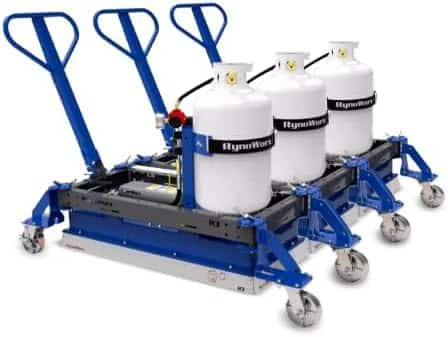
- An infrared asphalt heater. Roadly sells the RynoWorx R2, R3 and R4 modular infrared heaters. For large jobs, rent a Heat Design P300 from us. Call for rates and availability.
- CRF Asphalt Rejuvenator. 5 gallon pail, 47 lb, mixed with water as directed on the label and applied with a sprayer.
- Recycled asphalt. We recommend reclaimed asphalt for infrared repairs. Roadly does not sell millings or fresh mix, so source it locally.
- A compactor for the finished patch.

RynoWorx R-series heaters can be linked together to cover a larger work area with a single operator.
Frequently asked questions
Yes, if you are reworking heated or reclaimed asphalt. Heat softens the binder but does not replace the oils that have oxidized.
We recommend recycled asphalt. Roadly does not sell millings or fresh mix.
Cold mix. It is ready to use and does not need a rejuvenator.
Roadly sells the RynoWorx R2, R3 and R4 infrared heaters. For large jobs, rent a Heat Design P300 from us. Call us and we will help you choose.
It needs to cure first. Cure time depends on temperature, humidity and how heavily the rejuvenator was applied.
Shipped across Canada from Roadly in Edmonton. Hours Monday to Friday 9:00 am to 5:00 pm Mountain Time.
Questions? Call Roadly on 587-882-7623 or email support@roadly.ca.
